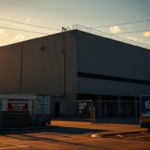
ICE Intensifies Inspections at Bonded Warehouses: Legal Risks and Implications for Employers and Workers
ICE Intensifies Inspections at Bonded Warehouses: Legal Risks and Implications for Employers and Workers
ICE Intensifies Inspections at Bonded Warehouses: Legal Risks and Implications for Employers and Workers
ICE Intensifies Inspections at Bonded Warehouses: Legal Risks and Implications for Employers and Workers
ICE Intensifies Inspections at Bonded Warehouses: Legal Risks and Implications for Employers and Workers
In late 2025, a series of immigration enforcement actions at bonded warehouses drew national scrutiny. This highlighted a growing enforcement trend with direct implications for employers and immigrant workers across the Mid-Atlantic region. This includes New Jersey and Pennsylvania. These developments reinforce the need for careful compliance and risk management in logistics, warehousing, and related industries.
This post examines several aspects. First, it explores what bonded warehouses are. Next, it reviews trends in federal enforcement activity. Then, it looks into impacts on workers and employers. Finally, it discusses relevant Pennsylvania enforcement and policy context.
Bonded warehouses are secure facilities authorized by U.S. Customs and Border Protection (CBP). They store imported goods before customs duties are paid. They also hold merchandise for re-export. Because the merchandise remains under federal control, CBP has authority to conduct unannounced inspections at these facilities without advance notice.
Under federal practice, CBP inspections may be accompanied by Immigration and Customs Enforcement (ICE) personnel. CBP’s statutory authority is focused on customs compliance. ICE agents often use these opportunities to verify immigration status. They also enforce immigration law at worksites. This dual-agency presence can bring worksite immigration enforcement into what would otherwise be routine trade compliance inspections.
In 2025, multiple enforcement actions at bonded warehouses in New Jersey highlighted how ICE and CBP operations intersect:
- Avenel, NJ: ICE detained 46 workers during an inspection at a bonded warehouse in October 2025. This action drew protests and calls for legislative protections.
- Woodbridge & Edison, NJ: Extra warehouse actions in Middlesex County led to multiple detentions at facilities. These actions involved CBP inspections paired with immigration status checks.
Federal officials characterize these operations as part of broader worksite initiatives. They aim to guarantee customs compliance. These efforts are designed to enforce immigration and employment verification laws. They also safeguard supply chain integrity. Critics, though, argue that ICE uses bonded warehouse access authorities to conduct immigration enforcement. They assert this occurs without the same procedural safeguards required at other workplaces.
A defining feature of bonded warehouse operations is that many workers are unaware of the customs status of their workplace. They do not know about the enforcement authority that federal agents can exercise inside these facilities. As a result:
- Workers can be detained during unannounced inspections;
- Language barriers and limited legal awareness can compound confusion;
- Family members do not get prompt notice of detentions.
These dynamics have raised concerns among immigrant rights advocates, policy analysts, and community groups. They worry about the collateral consequences of enforcement actions at facilities not traditionally thought of as enforcement targets.
Operators of bonded warehouses and logistics facilities should be aware of several key compliance risks:
- Worksite Enforcement Exposure: Joint CBP-ICE actions may trigger immigration status verification or arrests that extend beyond customs compliance.
- I-9 and Employment Eligibility Audits: Employers may face immigration audits and fines. This occurs if staffing practices do not align with federal verification requirements.
- Operational Disruption: Inspections and detentions can disrupt operations, supply chain commitments, and labor availability.
Proactive assessment of employment eligibility verification systems, including Form I-9 compliance, is important. Reviewing the roles of staffing agencies is also crucial. Additionally, evaluating worker classification can help mitigate exposure.
Although the recent bonded warehouse enforcement actions have been concentrated in New Jersey, Pennsylvania has also seen increased immigration enforcement activity at worksites — reflecting similar federal priorities:
- ICE Philadelphia Office Actions: In early 2025, ICE conducted multiple worksite enforcement operations in the Philadelphia region. These operations resulted in arrests of undocumented workers at local businesses.
- Bethlehem Worksite Inspection: In June 2025, ICE and federal partners arrested 17 undocumented workers. This occurred during a worksite inspection in Bethlehem, PA. This action underscores the agency’s broad use of on-site investigations to enforce immigration laws.
These Pennsylvania actions are not tied to bonded warehouse inspections per se. They reflect the same enforcement strategy. This strategy involves combining regulatory access with immigration status verification.
Meanwhile, Pennsylvania municipalities have taken differing approaches to federal cooperation:
- Montgomery County adopted policies limiting local employee cooperation with ICE absent a legal order.
- Allentown and Philadelphia have enacted (or reaffirmed) policies of limited cooperation with ICE to protect immigrant community trust.
Additionally, civil liberties advocates have released critical reports. These reports allege disproportionate targeting in Pennsylvania enforcement actions. They highlight the impact on families and low-wage workers.
For businesses, navigating immigration enforcement risks requires:
- Thorough internal audits of employment eligibility procedures;
- Clear communication with staffing partners;
- Legal counsel support to manage compliance and respond to enforcement actions;
- Community awareness of local sanctuary policies or limitations on cooperation with federal immigration authorities where applicable.
For workers and residents, understanding rights during inspections and enforcement actions is critical. In Philadelphia and elsewhere in Pennsylvania, advocacy groups and legal services recommend knowing your rights. Understand when law enforcement must show warrants. Know when access is declined, subject to legal exceptions.
The increase in ICE and CBP inspections at bonded warehouses is clear. Related worksite enforcement actions show a convergence of trade regulation and immigration enforcement. This impacts employers, supply chains, and workers.
In Pennsylvania, the most high-profile bonded warehouse enforcement has occurred in neighboring states. Nonetheless, federal worksite investigations continue in Pennsylvania. Policy debates are also shaping the landscape for businesses and immigrant communities alike.
As federal enforcement priorities evolve, employers should assess compliance frameworks. They need to guarantee robust employment verification systems. Workers and advocates should stay informed of legal rights. Staying updated on local policy protections is also important.